This honey produces an almost universal reaction in those who taste it for the first time: surprise, disorientation and, almost always, a need to understand where that singular flavour comes from. At Mas Entreserra we have spent years harvesting this product on Gavarres of the Empordà, and we know its strangeness raises questions that deserve honest answers. This guide covers everything you need to know: its chemistry, recent scientific studies, how to tell it apart from a blend, and why it is far more than an apiary curiosity.
Why does the Arbutus unedo produce a bitter honey? Homogentisic acid explained
The most common question about this winter nectar has a precise chemical answer. The bitterness is primarily caused by the presence of homogentisic acid, a phenolic compound found in the arbutus flowers (Arbutus unedo). Also known as melanuric acid, this compound acts directly on the tongue's bitter receptors and produces a sensation that lingers for several seconds, quite different from the astringency of other dark varieties.
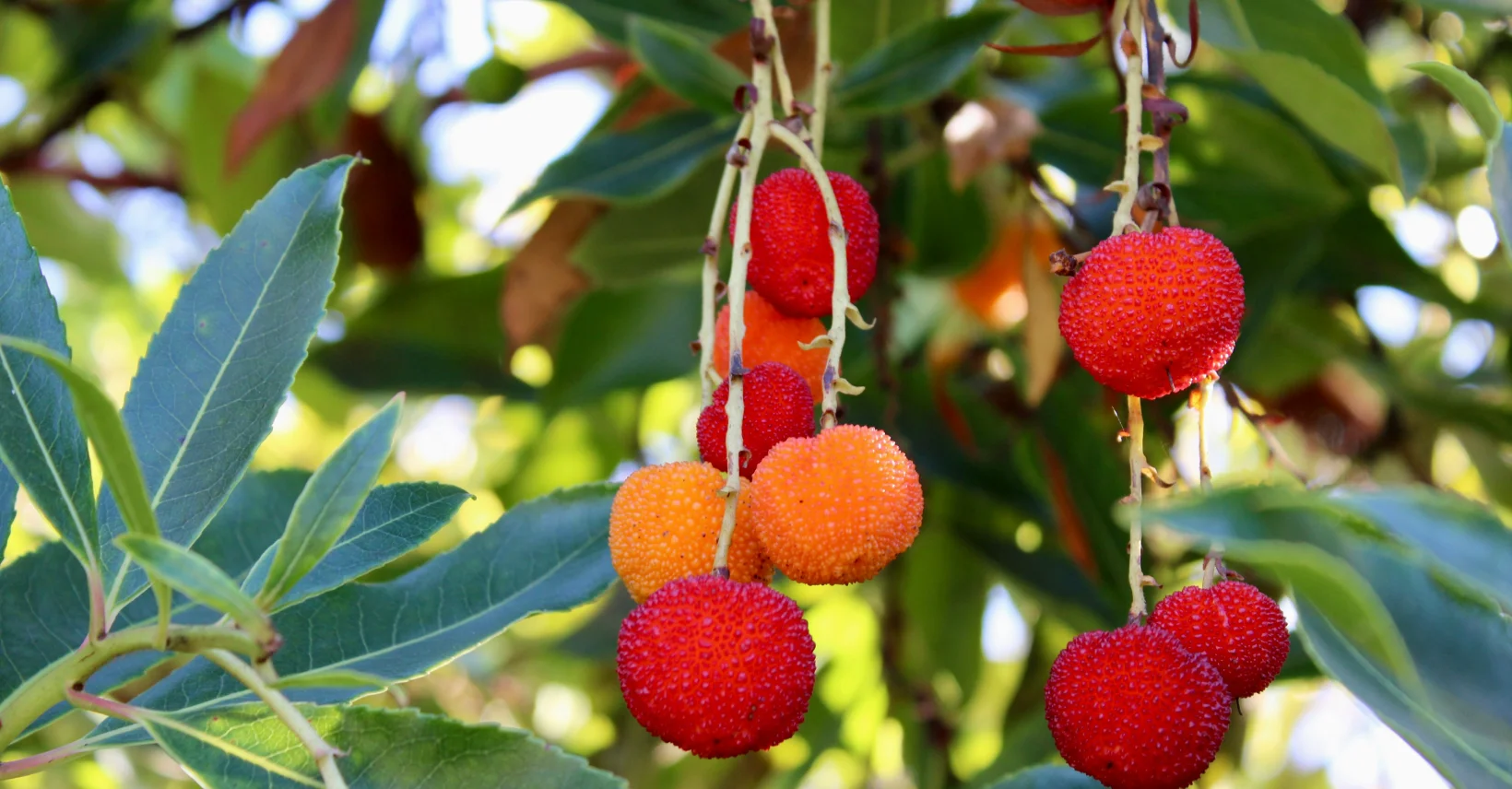
Its concentration is not constant: it varies with altitude, autumn climate and the precise moment of extraction. Harvests from higher altitudes and colder years tend to be more bitter. In addition to homogentisic acid, it contains arbutin and a specific profile of flavonoids that contribute to the complexity of its liquorice and damp earth finish. Understanding where the bitterness comes from is the first step towards learning to enjoy it: it is not a defect, it is the chemical signature of an extraordinarily late flowering.
At Mas Entreserra, we are confident that if you enjoy black coffee, without milk or sugar, you will love this honey. Many people say they don’t like honey because they find it too sweet or overly rich; if that sounds like you, this is your honey.
Laboratory studies on cell lines
In recent years, science has shown interest in the composition of this apiary rarity. Researchers from the Universities of Vigo and Granada, alongside the Università Politecnica delle Marche, published an in vitro study in the Journal of Functional Foods analyzing arbutus honey extracts on HCT-116 cell lines. The work provides data on the behavior of phenolic compounds under laboratory conditions. The research is preliminary and does not allow drawing any conclusions regarding effects on humans.
Arbutus vs chestnut honey: two bold honeys compared
Our protagonist and chestnut honey (Castanea sativa) share certain bitter notes, but they are very different products often confused on the market. Here is the key comparison:
- Colour: the arbutus variety is very dark, almost black; chestnut has a dark amber tone with reddish highlights (according to collection).
- Flavour: the former offers notes of liquorice, damp earth and intense bitterness; chestnut is more woody, with a much subtler and milder bitterness.
- Texture: chestnut honey crystallises very slowly (often staying liquid for a long time); arbutus crystallises very fast.
- Season: it is harvested in winter; chestnut in summer.
- Availability: chestnut is common in the market; the other is produced in very small volumes.
If you are seeking extreme intensity, this winter option has no rival. If you prefer a gentler, subtler bitterness, chestnut is an excellent alternative.
Gastronomy: Perfect pairings and Recipes
Its intense flavour makes it an extraordinary table companion for foods with strong character. The secret to a great pairing is to seek contrast, not sweet harmony.
Suggested Pairings: Aged cheeses, foie gras and dark chocolate
- Aged cheeses: a 12-month manchego, a pecorino or a well-aged local goat's cheese. The fat in the cheese wraps around the bitterness and creates a velvety experience.
- Foie gras: a sophisticated alternative to the classic chutney. Its notes cut through the richness of foie gras without masking it.
- Dark chocolate (+70% cacao): the synergy between the polyphenols in dark chocolate and the Arbutus unedo creates an interplay of bitternesses that soften each other.
- Roasted meats: a teaspoon in a reduction sauce for pork or duck adds tremendous depth.
Recipe: Vinaigrette for a fresh salad
Its bitter profile is a perfect fit for dressings: it provides just enough sweetness and balances acidity. Ingredients: 1 teaspoon of honey, 3 tablespoons of extra virgin olive oil, 1 tablespoon of sherry vinegar, 1 teaspoon of Dijon mustard, salt and pepper. Whisk the sweetener, mustard and vinegar until emulsified. Add the olive oil in a thin stream. This works especially well with salads featuring endive, anchovies and fresh cheese.
Why does it crystallise so fast?
If you have bought this product and found it crystallised within weeks, it is a sign of authenticity. This variety has an elevated proportion of glucose. Glucose is the sugar that crystallises most readily, forming a network of microcrystals. Its low water content — below 17% in quality harvests — also naturally accelerates crystal formation.
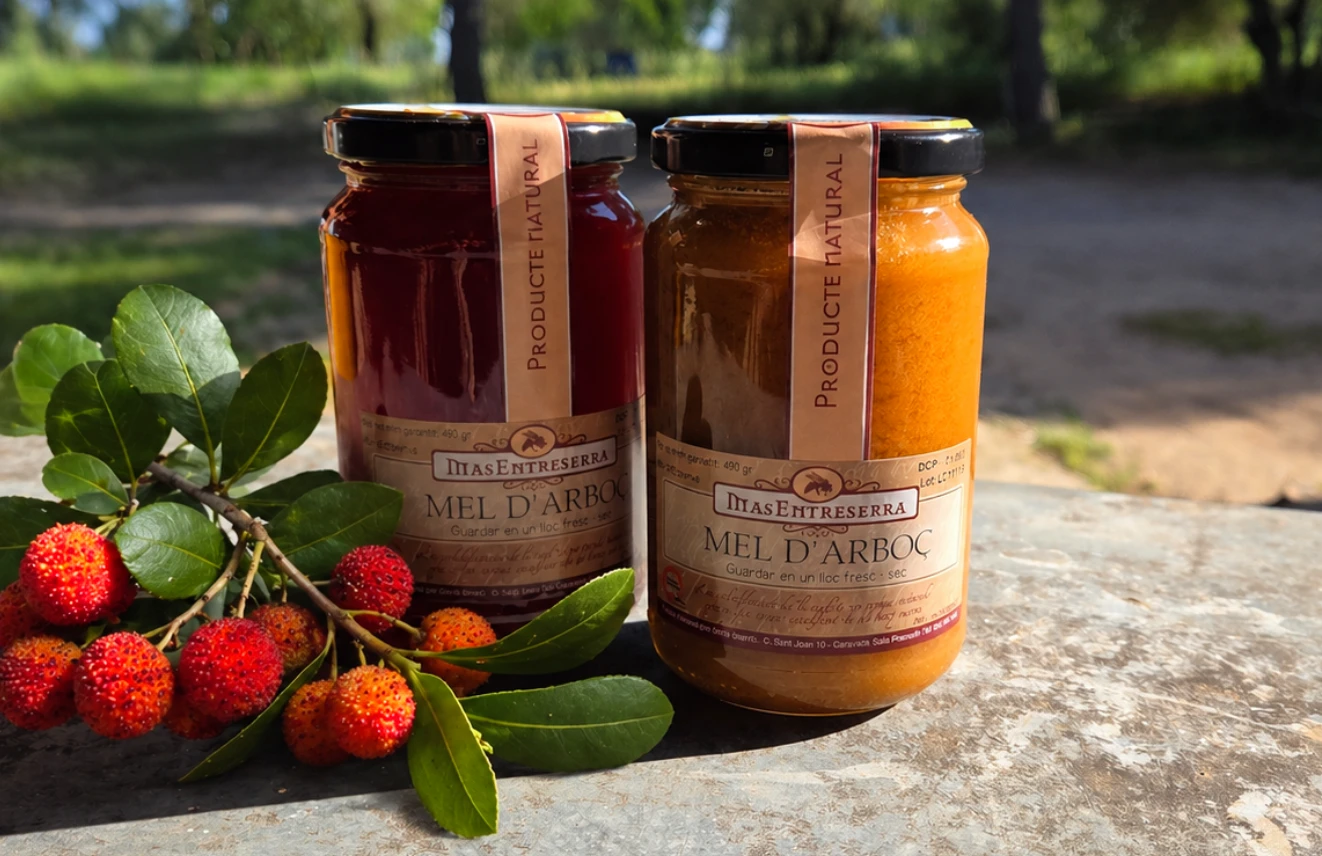
Once crystallised, it does not lose properties or flavour. You can return it to liquid form in warm water (never above 40°C), though many enthusiasts prefer the solid version for spreading on toast.
Flowering, harvesting and apiary transhumance
The Empordà is one of the few territories in Catalonia where the shrub grows in sufficient density to sustain monofloral production. The Mediterranean microclimate favours flowering between November and December, when virtually no other plant is active.
At Mas Entreserra, collecting the nectar involves apiary transhumance: hives are moved to forested areas from October onwards. Bees work in demanding winter conditions, and yields are considerably lower than spring harvests, making it an inherently seasonal and limited food.
Nutritional considerations and consumption
Traditionally, it has been attributed a different sugar profile compared to other varieties, although there are no conclusive studies in humans to make medical claims. Like any honey, it contains approximately 80% sugars and should be discussed with a healthcare professional in cases of diabetes to integrate it safely into a diet.
How to spot a genuine jar from a blend
The success of dark varieties has brought adulteration problems to the sector. Here is how to identify a genuine product:
- Colour: it should be almost black or very deep brown. Be sceptical of light amber colours.
- Flavour: the bitterness should be clear and persistent. If it is simply sweet, it is probably a blend. This appearance may vary between harvests or depending on the lighting.
- Pollen analysis: A genuine monofloral extraction should exceed 45% Arbutus unedo pollen.
- Price and Traceability: Purity cannot be cheap due to complex extraction. Serious beekeepers always state the origin.
At Mas Entreserra, every batch is labelled with its origin. We work with our own hives and total transparency. If you have questions, contact us — we love talking about our work.


